
The Growing Role of Commercial Glass Doors in Modern Supermarkets
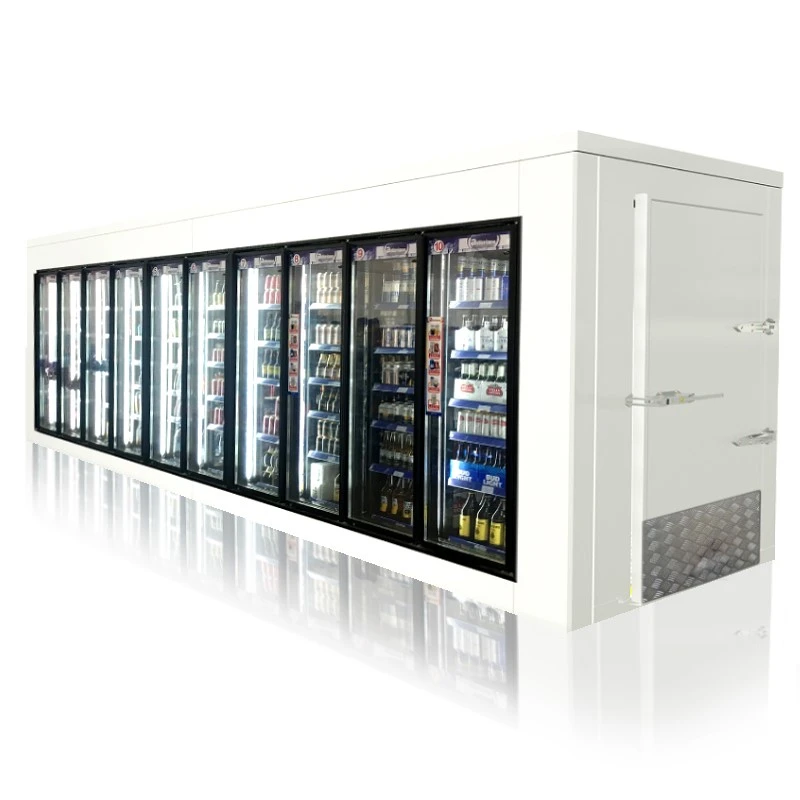
In recent years, glass door refrigerators have become an increasingly popular choice for supermarkets, convenience stores, and food retailers. Compared with traditional open display refrigerators, glass door refrigeration systems provide a more enclosed storage environment while allowing customers to view products clearly.
As retailers pay more attention to refrigeration efficiency, product presentation, and daily operating costs, commercial cooler glass doors are becoming an important part of modern supermarket refrigeration equipment.
In this article, we explore why more supermarkets are choosing glass door refrigerators and what equipment manufacturers and distributors should consider when selecting refrigeration glass doors.
1. Improved Refrigeration Efficiency
One of the main reasons supermarkets choose glass door refrigerators is the potential to reduce refrigeration energy consumption.
Open display refrigerators allow cold air to escape more easily, especially in busy retail environments where customers frequently pass by. Glass doors help create a physical barrier between the refrigerated space and the surrounding store environment.
When properly designed and installed, glass door systems can help reduce cold air loss and limit the entry of warm air into refrigerated cabinets. This can reduce the refrigeration load and support more efficient equipment operation.
For supermarket operators, selecting suitable glass doors is one practical consideration when improving the overall efficiency of refrigeration systems.
2. Better Product Visibility and Display
Product visibility is important in supermarkets and convenience stores.
Clear glass doors allow customers to see beverages, dairy products, packaged meals, and other refrigerated goods without opening the refrigerator.
This makes it easier for customers to identify products and compare different brands. For retailers, glass door display cabinets also provide a more organized and professional appearance.
Common applications include:
Beverage display refrigerators
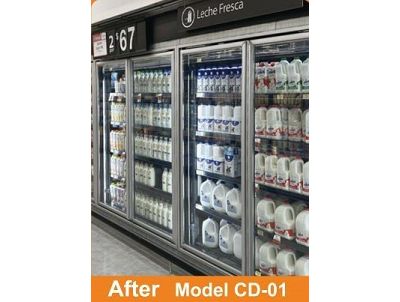
Fresh milk and dairy display cabinets
Prepared food display refrigerators
Cake and dessert display cases
Deli and fresh food display cabinets
Supermarket vertical cooler cabinets
3. Reduced Exposure to External Air
Every time a refrigerator door opens, warm and humid air can enter the refrigerated space.
A properly sealed glass door helps limit unnecessary air exchange when the refrigerator is not being accessed.
The door sealing system plays an important role in this process. Magnetic gaskets help create close contact between the door and cabinet frame, while automatic door return mechanisms help ensure that doors move back toward the closed position after use.
For commercial refrigeration equipment, these components are important considerations when selecting glass door assemblies.
4. Heated Glass Helps Reduce Condensation
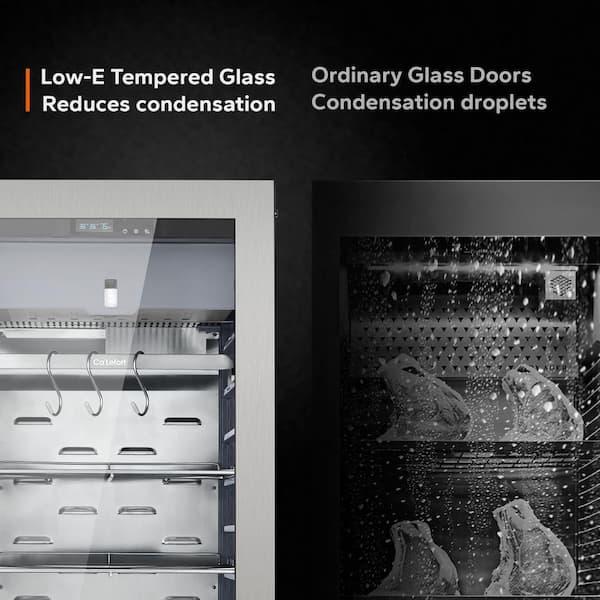
Condensation and fogging can affect the visibility of glass doors, particularly in environments with high humidity or significant temperature differences.
Heated glass uses an electric heating system to help reduce condensation, fogging, and frost formation on the glass surface.
It is commonly considered for:
Commercial freezer display doors
Walk-in freezer glass doors
Low-temperature refrigeration equipment
Refrigeration cabinets operating in humid environments
Depending on the application, heated glass can be combined with double or triple glazing to meet different insulation and operating temperature requirements.
5. Different Glass Configurations for Different Applications
Not all refrigeration equipment operates at the same temperature. Glass door configurations should be selected according to the equipment design and operating conditions.
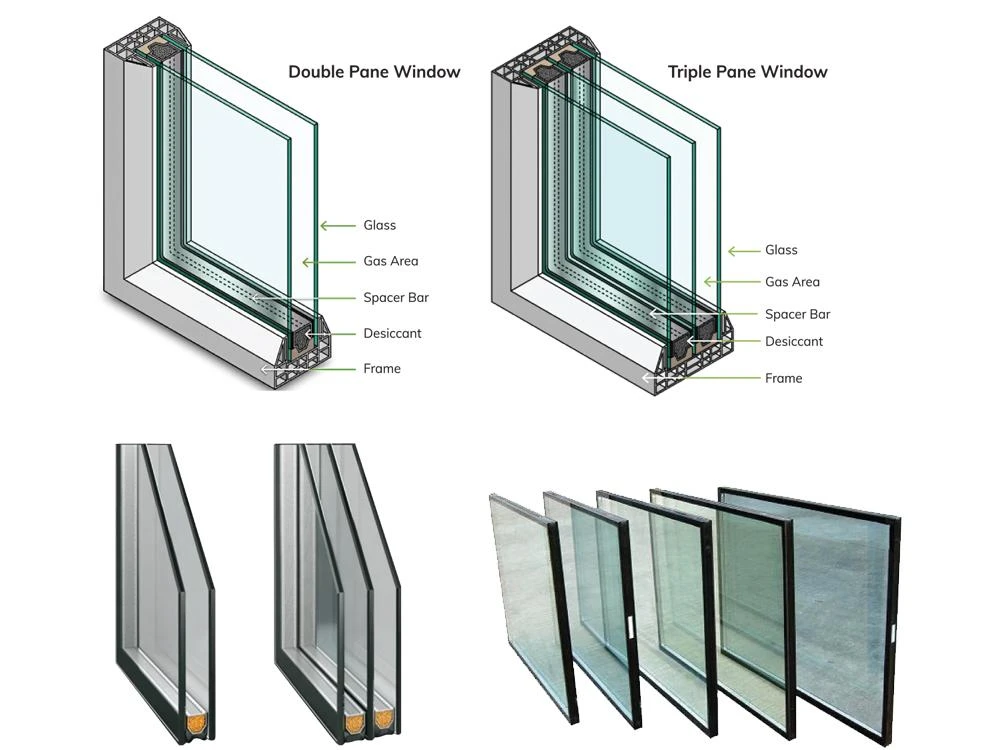
Double-Glazed Glass Doors
Double-glazed glass consists of two glass panes with one insulating cavity. It is commonly used in commercial cooler applications, such as beverage refrigerators and dairy display cabinets.
Triple-Glazed Glass Doors
Triple-glazed glass consists of three glass panes with two insulating cavities. It is often selected for lower-temperature freezer applications where additional thermal insulation is required.
Other configuration options may include heated glass, argon gas filling, different frame materials, and customized door dimensions.
6. What Should Supermarkets and Equipment Manufacturers Consider?
Before selecting commercial refrigeration glass doors, buyers should evaluate several important specifications:
| Selection Factor | What to Consider |
|---|---|
| Operating Temperature | Cooler or freezer temperature requirements |
| Glass Structure | Double glazing or triple glazing |
| Glass Heating | Heated or non-heated configuration |
| Gas Filling | Argon gas or other specified configurations |
| Door Frame | PVC or aluminum frame |
| Door Gasket | Magnetic or other sealing systems |
| Hinges | Standard or adjustable hinge options |
| Door Closing | Automatic door return mechanism |
| Door Dimensions | Width, height, and installation requirements |
| Additional Options | Handles, locks, LED lighting, and other accessories |
For OEM projects, it is also important to confirm equipment drawings, installation dimensions, and the required door configuration before production.
7. The Future of Supermarket Refrigeration
As supermarkets continue to improve refrigeration equipment and store layouts, glass door refrigeration systems are expected to remain an important option for refrigerated product display and storage.
For refrigeration equipment manufacturers, distributors, and wholesalers, choosing the right glass door supplier involves more than comparing prices. Product specifications, manufacturing capabilities, customization options, quality control, and after-sales support should also be considered.
Conclusion
Glass door refrigerators offer supermarkets a practical combination of product visibility, enclosed refrigerated storage, and opportunities to improve refrigeration efficiency.
From beverage coolers and dairy cabinets to walk-in cooler and freezer rooms, commercial refrigeration glass doors serve a wide range of applications.
Choosing the appropriate glass structure, heating system, door frame, and sealing components helps ensure that the final door configuration meets the requirements of the refrigeration equipment.
Looking for a commercial refrigeration glass door manufacturer?
We supply customized cooler and freezer glass door solutions for refrigeration equipment manufacturers, distributors, wholesalers, and commercial refrigeration projects.
Contact us to discuss your required dimensions, glass configurations, and OEM manufacturing needs.