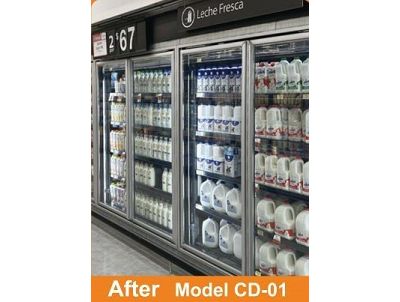

How to Choose the Right Commercial Refrigeration Glass Doors for Coolers and Freezers
Commercial refrigeration glass doors play an important role in supermarkets, convenience stores, beverage display cabinets, and other commercial refrigeration equipment. They allow customers to view products while helping maintain the required temperature inside the cabinet.
However, not all refrigeration glass doors are designed for the same operating conditions. Cooler doors and freezer doors have different glass configurations, heating requirements, and sealing structures.
For refrigeration equipment manufacturers, distributors, and commercial refrigeration contractors, understanding these differences is essential when selecting the right glass door solution.
In this guide, we will explore the main components, glass configurations, operating temperature requirements, and customization options of commercial refrigeration glass doors.
1. What Are Commercial Refrigeration Glass Doors?
Commercial refrigeration glass doors are insulated door assemblies designed for commercial coolers and freezers. They typically consist of insulated glass panels, aluminum alloy frames, hinges, magnetic gaskets, and optional heating and lighting components.
Unlike ordinary glass doors, refrigeration doors are designed to operate in temperature-controlled environments. Their structure needs to support thermal insulation, reliable sealing, and convenient access during frequent daily use.
Common applications include:
Reach-in coolers and freezers
Supermarket beverage display refrigerators
Frozen food display cabinets
Commercial upright refrigerators
Convenience store refrigeration cabinets
Walk-in cooler and freezer display applications
Depending on the equipment design and operating temperature, different glass structures and heating configurations may be required.
2. Double-Glazed vs. Triple-Glazed Glass: What Is the Difference?
The glass configuration is one of the most important factors when choosing a commercial refrigeration door.
Different temperature environments require different levels of insulation and condensation control.
Double-Glazed Glass for Commercial Coolers
Double-glazed glass consists of two glass panels with an insulated airspace between them. For cooler applications, the insulated space can be filled with argon gas to support thermal insulation.
Our cooler glass door configuration includes:
Two glass panels
Single insulated airspace
Electric glass heating
Argon gas filling
Suitable for operating temperatures from 0°C to +8°C
This configuration is designed for commercial refrigeration equipment used to store beverages, fresh food, dairy products, and other chilled products.
Triple-Glazed Glass for Commercial Freezers
Freezer doors operate under lower temperatures, making condensation and frost control more demanding.
Triple-glazed glass consists of three glass panels with two insulated airspaces. Electric heating is incorporated into the glass door configuration to help reduce condensation and fogging.
Our freezer glass door configuration includes:
Three glass panels
Double insulated airspaces
Electric glass heating
Argon gas filling
Suitable for operating temperatures from -28°C to -5°C
Triple-glazed construction provides an additional insulating layer, making it suitable for low-temperature commercial freezer applications.

3. Why Is Electric Heating Important for Refrigeration Glass Doors?
Condensation and fogging can affect the visibility of products inside refrigeration cabinets.
When warm, humid air comes into contact with a cold glass surface, moisture may accumulate on the glass. This can make it difficult for customers to see the displayed products.
Electric heating helps maintain the glass surface temperature and reduces the formation of condensation and fog.
For commercial refrigeration applications, heated glass is particularly important for:
Frozen food display cabinets
Supermarket freezers
Low-temperature display refrigerators
Commercial upright freezers
The heating configuration should be selected according to the operating temperature and the refrigeration equipment design.
4. Aluminum Alloy Frames and Door Structure
The door frame is another important component of a commercial refrigeration glass door.
Our glass doors use aluminum alloy profiles, providing a structural frame for the insulated glass panels and supporting the door assembly.
Key structural features include:
Aluminum alloy door profiles
26 mm flange width
Standard door shafts and hinges
Pull-open door design with a stop and automatic return function
The door structure is designed for frequent opening and closing in commercial environments.
The hinge and door-return mechanism help provide convenient access while allowing the door to return automatically after opening.

5. Magnetic Gaskets and Temperature Sealing
A reliable sealing system is essential for commercial refrigeration doors.
Our doors use TPE magnetic gaskets designed to provide a close seal between the door and cabinet frame.
The main characteristics include:
Magnetic sealing structure
Good flexibility
Resistance to high and low temperatures
Resistance to deformation under normal operating conditions
A properly fitted gasket helps reduce unwanted air exchange between the cabinet interior and the surrounding environment.
For refrigeration equipment manufacturers, gasket material and sealing compatibility should be considered when selecting replacement or customized glass doors.
6. Additional Features for Commercial Refrigeration Doors
Apart from the main glass and frame structure, several optional or functional components can be considered according to the equipment requirements.
Freezer Temperature Controller
A temperature controller can be configured for freezer door applications to support the required heating control.
ERC Lighting
ERC lighting is available as part of the door configuration to improve product visibility inside refrigeration cabinets.
Automatic Door Return
The pull-open door structure includes a stop and automatic return function, helping improve convenience during daily operation.
These components can be selected according to the specific cabinet design and customer requirements.
7. Standard Sizes and Customization Options
Commercial refrigeration equipment comes in different cabinet dimensions, so glass door sizes need to match the equipment structure.
Our standard glass door sizes include:
24 × 75 inches
30 × 79 inches
Custom dimensions are also available for different refrigeration equipment and project requirements.
Customization options can include:
Door width and height
Aluminum frame configuration
Double-glazed or triple-glazed glass
Glass heating configuration
Door hinge and opening structure
Gasket configuration
Lighting and temperature control components
Before placing an order, buyers should confirm the cabinet opening dimensions, installation requirements, operating temperature, and door configuration.
8. What Should Buyers Consider Before Ordering Refrigeration Glass Doors?
For refrigeration equipment manufacturers, distributors, and replacement door suppliers, several technical details should be confirmed before purchasing.
1. Operating Temperature
Determine whether the application is a cooler or freezer. This directly affects the required glass configuration.
2. Glass Structure
Choose double-glazed glass for suitable cooler applications and triple-glazed glass for lower-temperature freezer applications.
3. Door Dimensions
Confirm the required width, height, and flange dimensions to ensure installation compatibility.
4. Opening Mechanism
Check the hinge structure, opening direction, door stop, and automatic return function.
5. Sealing and Heating
Consider the magnetic gasket and electric heating configuration according to the working environment.
6. Additional Components
Confirm whether temperature controllers and ERC lighting are required.
Providing these details before production helps buyers select a door configuration that matches their refrigeration equipment.
9. Commercial Refrigeration Glass Door Manufacturing and Supply
Choosing the right refrigeration glass door is not just about selecting a glass panel. It involves matching the glass structure, frame profile, heating system, sealing components, and opening mechanism to the intended refrigeration application.
For commercial refrigeration manufacturers, wholesalers, distributors, and equipment suppliers, having access to standard sizes and customized door solutions can help meet different project requirements.
Our commercial refrigeration glass doors are available in cooler and freezer configurations, with double-glazed or triple-glazed glass, electric heating, argon gas filling, aluminum alloy frames, TPE magnetic gaskets, and optional functional components.
Standard sizes of 24 × 75 inches and 30 × 79 inches are available, with customized dimensions supported.
Warranty: 6 Years
Contact our team to discuss your glass door specifications, customization requirements, and commercial refrigeration projects.