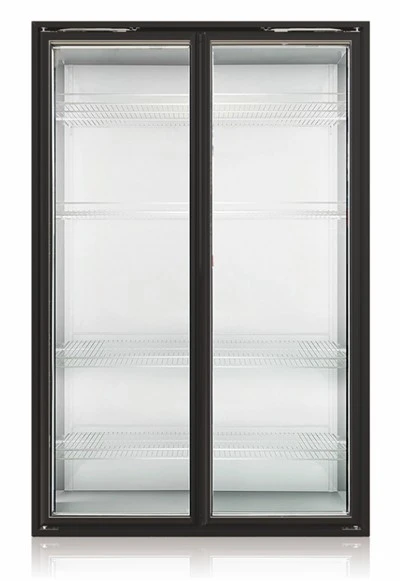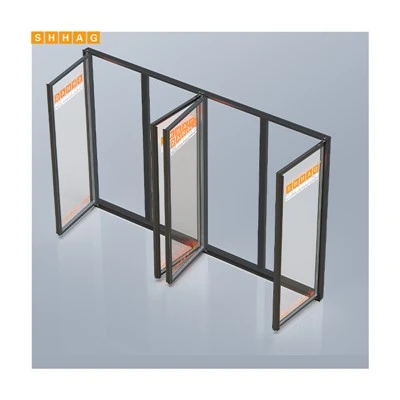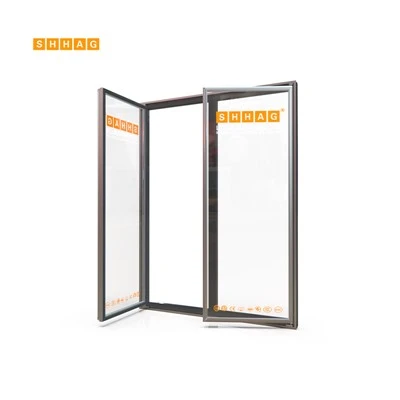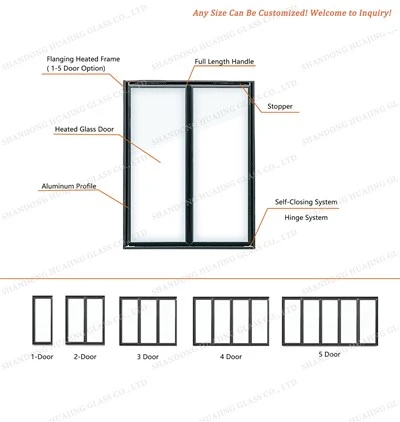
The key to determining the material of a glass door frame is to examine the thickness of the profile, surface finish, brand logo, and cross-sectional structure. High-quality frames often use aluminum alloy or stainless steel, while inferior products frequently use recycled aluminum or pseudo-stainless steel.
1. Observe the Profile Cross-Section
High-quality frames: The cross-sectional structure features a multi-cavity design, providing heat insulation and drainage functions. The wall thickness is no less than 1.2mm, with high-end products reaching 1.5–2.0mm.
Inferior frames: Use recycled aluminum, resulting in a thin cross-section, simple structure, and a thickness often less than 1.0mm. They have poor load-bearing capacity and are prone to deformation.
2. Check the Material Type
Aluminum alloy frames: The mainstream choice, lightweight, durable, and rust-free. The surface is often treated with electrophoretic spraying or anodizing, resulting in a uniform gloss and corrosion resistance.
Stainless steel frame: Suitable for high-humidity environments (such as bathrooms). 304 stainless steel with a thickness ≥1.2mm is recommended. Beware of counterfeit "stainless iron"; a preliminary test with a magnet (304 is weakly magnetic or non-magnetic) is recommended.
Avoid wooden frames: Prone to moisture deformation in humid areas; only suitable for dry spaces and requires high maintenance.
3. Test Hardness and Weight
Hand Pressure Test: Press the frame with your finger. Aluminum alloy with a hardness of 13 degrees or higher is difficult for an adult to deform.
Weight Perception: High-quality aluminum alloy has high density and feels heavier; recycled aluminum is light and of poor quality.
4. Check Surface Treatment Process
Electrophoretic Coating: Bright surface, not easy to peel, strong UV resistance, suitable for long-term use.
Anodizing: Wear-resistant and corrosion-resistant, natural color, often used in high-end products.
If the surface has burrs, color differences, or oxidation peeling, it indicates poor processing.