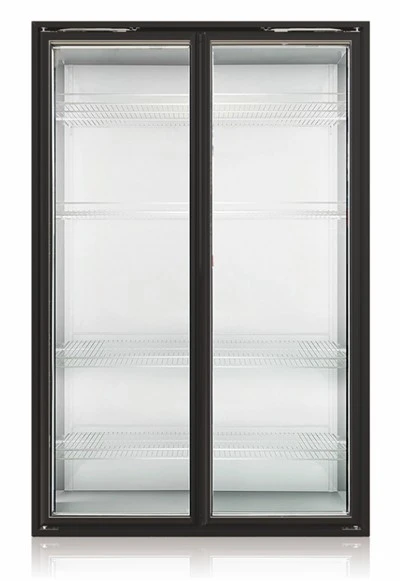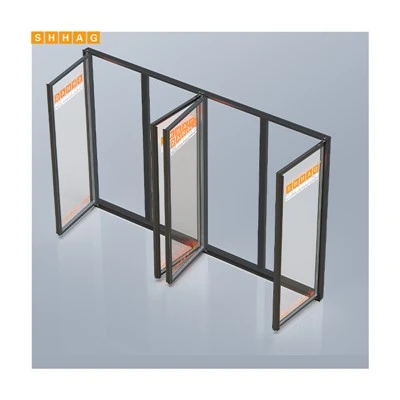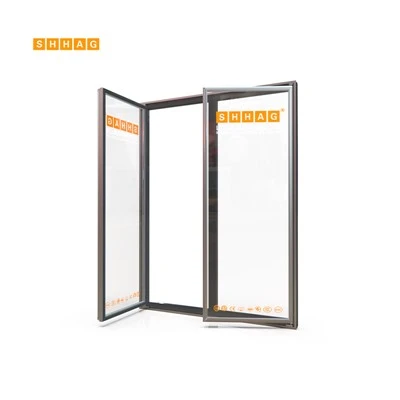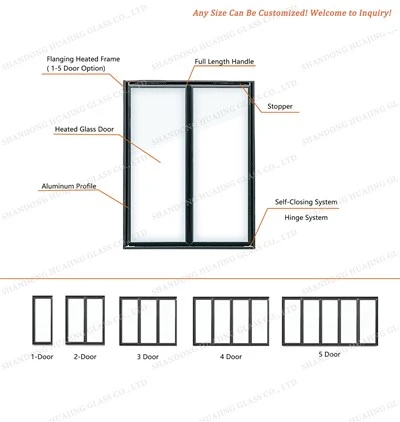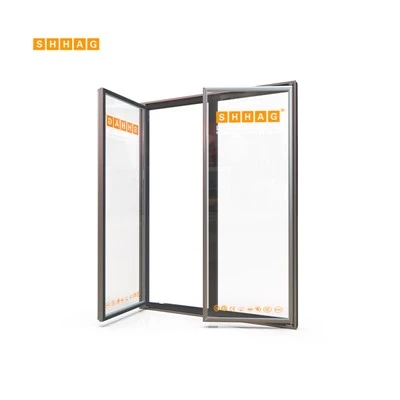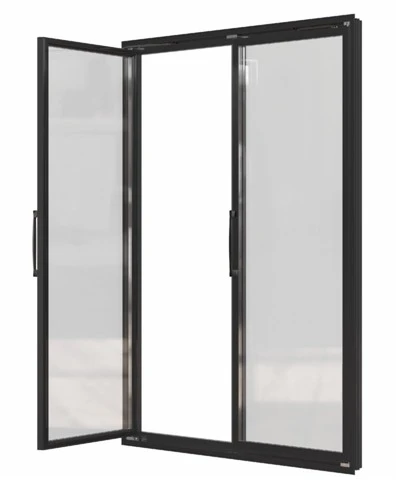
Frameless glass doors are characterized by the absence of a fixed frame around the door panel. Stability and functionality are primarily achieved through a combination of tempered glass and metal fittings.
These doors use 8-12mm thick tempered glass as the core material, secured by upper and lower decorative frames, clips, or floor springs to achieve a completely transparent visual effect. Their main structural components include:
Slide Rails and Carts: Used in sliding frameless glass doors, the carts are mounted in double-grooved slide rails to ensure smooth door movement.
Door Clips and Fixtures: Door clips clamp the glass, and bolts connect the hanger nuts and carts, ensuring a secure connection between the glass and the track.
Floor Springs: Commonly used in casement frameless glass doors, embedded in the ground, controlling the automatic opening and closing of the door.
Metal-Flatted Base Support and Limiting Groove: Used to support the bottom of the glass and limit its top position, with sealant application enhancing stability.
Four-wheel load-bearing design: Each pane of glass is supported by four pulleys (three layers of main wheels and two layers of auxiliary wheels), improving load-bearing capacity and smooth sliding.
Invisible joint process: The joint between the glass and the door frame is sealed with adhesive to form a uniform sealing line, balancing aesthetics and structural strength.